


There is probably no person who has never had lower back pain.In addition, discomfort can appear at any age, regardless of gender, work activity and other factors.
Back pain in the lumbar region, different in nature and causes, significantly complicates life.Ignoring obvious symptoms of pathology can worsen the situation.
Types of pain syndrome
The main classification of pain syndrome is as follows:
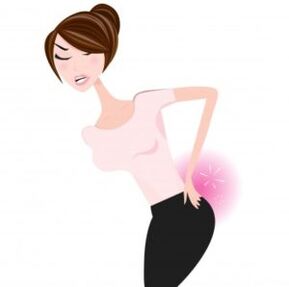
- Primary.
- Secondary.
The first variant is characterized by pathology of the spine and the entire musculoskeletal system.The muscles, tendons, and ligaments undergo a number of changes, resulting in a person's back pain.
Discomfort of a secondary nature is not directly related to the lumbar region.Usually, its development is influenced by indirect pathologies.
Depending on the cause of the occurrence, pain in the lower back varies in different ways.Discomfort can be sharp and sharp, or vice versa, painful and dull.It is necessary to understand in more detail the nature of each of the options.
Sharp and sharp pain
It cannot be considered an independent pathology.Usually, sharp pain in the lower back is a sign of some disease.Most often, people encounter them after the age of 30.
Severe pain in the lower back can occur for a number of reasons.One of them is hypothermia of the indicated area.Muscles weaken and are easily susceptible to negative effects.Pain in the lower back makes movement difficult, depriving the patient of mobility.It is hardly possible to do anything on your own if your back hurts a lot.The right thing would be to call a specialist.

Suddenness can be caused by a number of reasons:
- Intervertebral hernia.
- A sedentary lifestyle.
- Excessive loads.
- Injury.
What to do if there is a sharp pain in the lower back?The best option is to see a doctor.If this cannot be done immediately, you will need to relieve the symptoms of inflammation with drugs.
A dull aching pain
The causes of lower back pain are varied.A complete examination of the body will be necessary to establish them.The accuracy of the diagnosis depends on many signs.Here are the main ones:
- A place where discomfort is concentrated.
- Age category of the patient.
- The patient's diet.
- The presence of bad habits (smoking, alcoholism, etc.).
- The patient's body weight.
Throbbing pain in the lower back often occurs in women of reproductive age.There is a pull in the lower back due to the following reasons:
- Fatigue.Reducing physical activity will help ease the discomfort.Warming the problem area with heating pads or ointments has a positive effect.
- Pregnancy A special bandage will come to the aid of the woman, reducing the load.
- Menstruation.Medicines will help alleviate the situation and relieve dull pain.
- Improper posture, osteochondrosis, osteoporosis.
- Intervertebral hernia, arthrosis.
- Pathologies of the genitourinary system.
- Radiculitis.
- Any injuries.
To find out why your lower back hurts, you need to conduct a small experiment.The patient should stand with his back straight and lean against the wall.Then slowly lower your chin, tucking it into your chest.The resulting pain or pulsation on each side (top, bottom, side) will help determine the underlying cause of the aching pain.
Causes of disease in women

In addition to the general ones, there are a number of reasons that apply only to the fair sex.
This may include:
- Pregnancy
- Problems in gynecology.
- Menzies.
- Mechanical abortion.
Women usually do not know what to do if they experience back pain due to a strong shock or unnecessary worries.The situation can be improved only through psychological therapy.
Problems in gynecology
The presence of gynecological diseases in a woman often becomes a starting point for the development of pain.
The problems can be the following:
- Inflammation of the external genitalia (vulvitis).
- Tumor of any nodes of the genitourinary system.
- Adnexitis (in other words, inflammation of the appendages).
- myoma.
The symptoms of the pathology are as follows:
- The presence of copious discharge.
- An infection whose foci are concentrated in the vagina.
- Problems conceiving a child.
Often a woman complains of pain in the lower abdomen.Sometimes the pain radiates to the lumbar region.
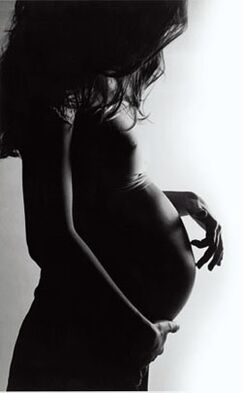
Pregnancy
The period of pregnancy for the female body does not pass without a trace.During the last trimester of pregnancy, the load on the bones of the spine increases significantly, which is explained by an increase in the size and weight of the fetus.
Due to its physiological structure, the lumbar part of the spine suffers the most.Lower back pain is natural and quite noticeable.Lower back pain usually goes away after the baby is born.
Menstruation
Such a familiar phenomenon for a woman can be accompanied by pain in the lower back.
This is explained by the following factors:
- Release of the follicle from the ovary.
- Enlargement of the uterus.
- Pathologies of the reproductive system.
In addition, pain can also occur during menopause.This is usually due to hormonal changes and imbalances.With the onset of menopause, a woman's bones become more fragile and brittle, which is characteristic of osteoporosis.
abortion
Mechanical termination of pregnancy also does not pass without a trace, which is a serious stress for the body.During the contraction of the uterus, an inflammatory process begins.The latter focuses on the internal surface of the organ.
Please note: women are more prone to lower back pain than men.
Causes of disease in men
Men as well as women suffer from lower back pain.
The most obvious reasons are:
- prostatitis.At first it hurts only in the anus.As intoxication progresses, the patient begins to feel discomfort in the lower back.
- In other words, epididymitis is an inflammatory process in the epididymis.As such, the back does not hurt, but sometimes unpleasant sensations appear.
- Oncology of the genitourinary system.It often affects men of pre-retirement age (over 50).
- Bodybuilding, bodybuilding.
- Injuries of the muscular system.Lumbar pain is caused by tension in the latissimus dorsi muscle.
Occupational activity plays an important role in identifying the cause of lower back pain.
Causes of illness in children
Pathology in children develops due to the following factors:
- Spinal hernia.
- Incorrect posture.
Usually the cause of the latter is flat feet.Although choosing a comfortable briefcase and the right shoes are also important.
Please note: in the early stages, the child's spinal curvature can be corrected.Physiotherapy helps a lot with this.
Relationship with diseases
The above classification is not the only one.Illness can be intermittent or constant.
In the first case, the malaise is directly related to factors such as:
- Excessive physical activity.
- Exacerbation of existing diseases.
- Some features of physiology.
Periodic pain subsides when the symptoms of the underlying pathology are alleviated.
Serious lesions of deep vessels and injuries of the musculoskeletal system can provoke constant malaise.Treatment somewhat alleviates the situation, but does not solve it completely.
Diseases of the spine
The causes of constant pain in the lumbar region are the following:
- Spinal curvature.The disease is characterized by skeletal deformity, poor posture, and the appearance of a hump in the costal region.Sometimes scoliosis is asymptomatic for quite a long period of time.
- Intervertebral osteochondrosis of the lumbar region.Pathology destroys bones and cartilage, affects nerve fibers.Sometimes the disease becomes a catalyst for the development of protrusion, sciatica, radiculitis of the lumbar region and herniation of the intervertebral discs.
- Destructive changes in the vertebrae.They cause lumbago (lumbago).Usually, acute pain occurs in men with excessive physical exertion.Lack of appropriate treatment leads to irreversible consequences.
- spondylosis.The articular apparatus of the lumbar region ages, thins and loses its mobility.This process is quite natural.
- Inflammation of all nodes of bone tissue (osteomyelitis).The nature of the process is infectious.
- Osteoporosis (increased bone fragility).It is usually diagnosed in children and women during menopause.
- Thrombophlebitis, phlebothrombosis.In the deep veins, blood flow stops completely or partially.This leads to pain after a long walk.
- Rheumatoid arthritis.Chronic inflammation begins in the joints of the lumbar region, affecting muscles, cartilage and ligaments.This systemic disease is often seen in women.The cause of the pathology is problems with the immune system.
- Atherosclerosis in the last stage.It is often diagnosed in older men.
Some people have lower limbs of different lengths.A wide range of values (more than 1-3 cm) is one of the causes of pain in the lumbar region.
Diseases of internal organs
The development of the disease is affected not only by problems with the spine.
The pain syndrome occurs in the following diseases:
- Inflammation of the appendix.A person is worried about discomfort in the lower abdomen on the right, sometimes the pain radiates to the back.
- Cholecystitis (inflammation of the walls of the gallbladder).
- Pathologies of the small intestine.The lower back hurts because the disease affects the nerve fibers of this area.
- Spikes.Usually the result of surgery.
- Inflammation of the pancreas (pancreatitis).The pathology is accompanied by a pain syndrome with the character of herpes zoster.Signs of the disease are vomiting, bowel problems (diarrhea or constipation), a coating on the tongue and nausea.Low back pain is not diagnosed by palpation.
- Renal pathologies.
- Tuberculosis of the bones.
- Inflammatory processes in the muscular system.The nature of tissue damage is different (infectious, bacterial, viral).Sometimes inflammation develops due to hypothermia.The process is accompanied by an increase in body temperature and general malaise.
- Lumbar tumor growing along nerve fibers.
Overweight and obesity also cause discomfort.The pain occurs due to excessive load on the lower back.
Additional symptoms
To determine why the lower back hurts, you need to consider all possible signs of the disease.
Here they are:
- Sprains are accompanied by painful spasms, and the damaged muscles are limited in movement.The discomfort sometimes extends to the back of the lower limbs and the gluteal area.
- Numbness in the limbs occurs if the nerve roots of the lower back are injured.
- Pupil dilation.
- Excessive sweating.
- Increased heart rate.
- A fever.
If the pain in the lower back is the result of some pathology, the symptoms will appear gradually.
Diagnosis of the problem
What to do if your lower back hurts?First, it is necessary to perform a complete examination of the patient.
Diagnosis is based on procedures such as:
- Analysis of urine and blood in a laboratory.Biochemistry will also be required.
- Ultrasound examination of the heart, internal organs of the abdominal cavity.This is relevant if you suspect kidney or gastrointestinal pathologies.
- X-ray of the lumbar region.
- CT AND MRI.With their help, you can determine the cause of the pain.
- Doppler (vascular examination).
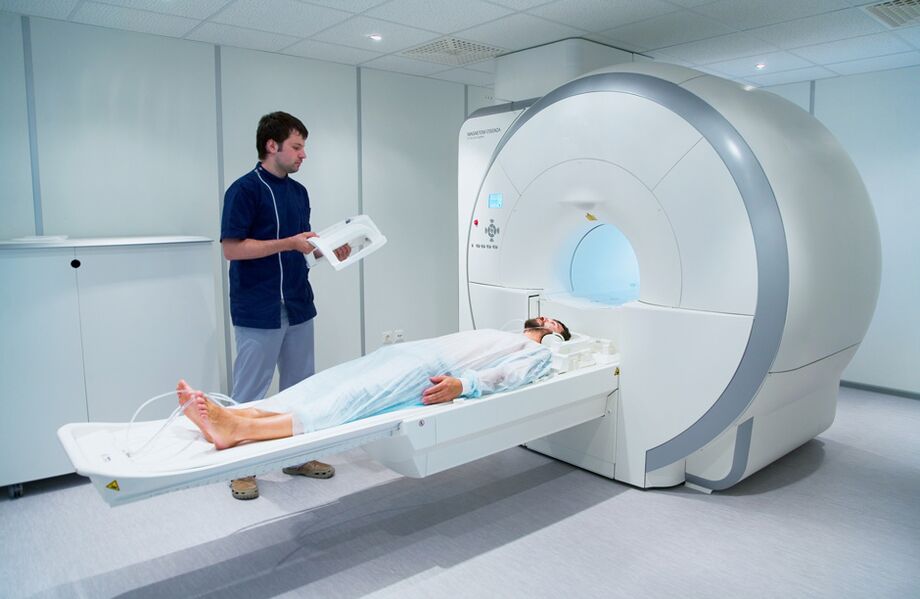
Carrying out all these activities allows to establish a catalyst for the development of the pathology and to determine methods for its elimination.
Treatment
Getting rid of the pathology must be comprehensive and can be done in different ways.
To avoid worsening the situation, you should not:
- Warm up the lumbar region.
- Take medication at your own discretion.
- Adjust the vertebrae yourself, contact a chiropractor.
Please note: without identifying the main cause of the discomfort, self-medication is dangerous.
Physiotherapy and massage
Treatment of lower back pain is possible with physical therapy.
If the patient cannot move due to severe pain, he is shown:
- massage.Applicable if the patient is worried about pain in the lower back or finds it difficult to bend.
- Mud treatment.
- Paraffin applications.
- Therapeutic gymnastics.

Sometimes acupuncture and manual therapy are helpful.They strengthen the bone apparatus, relieve muscle tension.
medicines
If the patient experiences pain in the lumbar region after physical activity, drug therapy is indicated.
The following groups of drugs will help relieve the condition and relieve pain:
- Nonsteroidal anti-inflammatory drugs (NSAIDs).
- Muscle relaxants.
- Narcotic pain reliever.
- Corticosteroids.
- Chondroprotectors.
It is permissible to use ointments locally.If the effect is not achieved, injections are used.Only a specialist has the right to prescribe how to treat the lower back.
People's funds
Along with medication, you can treat an inflamed lower back using traditional methods.
The following recipes apply:
- Grind the head of garlic, add a little vaseline and 1 tsp.lemon juice.Apply the resulting ointment to the sore areas.
- Take a bath with mustard (200 grams of powder).Then rinse your body with clean water, dry yourself and dress warmly.
- If it hurts when you walk, make a horseradish compress.Grate it (you can replace it with radishes), add sour cream and place on a thin towel.Apply to the affected area, fasten and wrap.

The dosage for taking folk remedies or medicines must be prescribed by your attending physician.
You can heal the lower back with an alcohol tincture of eucalyptus.You will need to thoroughly rub the sore area.
Preventive measures
Heaviness in the lower back can be prevented by prevention.
To do this you need:
- Do gymnastics regularly.
- Control your posture.
- Strengthen your immune system, do sports, give up bad habits.
- Do annual reviews.
- Drink at least 1.5 liters of water regularly.
Remember that even nervous shocks and experiences can provoke the development of the disease.It is important not to self-medicate, but to turn to competent specialists.Time spent in unqualified therapy can sometimes be decisive.